This article is published in Aerospace Daily & Defense Report part of Aviation Week Intelligence Network (AWIN), and is complimentary through Apr 10, 2026. For information on becoming an AWIN Member to access more content like this, click here.

HOUSTON—Artemis II mission crewmembers conducted a translunar injection (TLI) maneuver on April 2 that cast them out of the low point of a high Earth orbit and placed their Orion capsule on a trajectory around the Moon.
The maneuver was a major milestone in NASA’s ambitious 10-day mission to send the four astronauts to the Moon, a destination last visited by human explorers in 1972.
The 5-min., 50-sec. TLI got underway at 7:49 p.m. EDT with the 1,275-ft.-per-sec. firing of the main engine that is part of the Orion capsule’s European Space Agency (ESA)-provided service module. The firing followed a “go/no go” decision by NASA’s Mission Management Team.
NASA Administrator Jared Isaacman joined the agency’s Mission Control team at Johnson Space Center here to monitor the activities leading up to the TLI, which included a pre-ignition cabin air leak warning. The warning was quickly linked to an air recirculation operation following a crew exercise period and deemed not a concern.
With the TLI’s success, the Integrity Orion capsule began its departure from the low point of the astronauts’ post-launch, elliptical Earth orbit on a trajectory that is to bring them into the lunar realm from early April 6 until midday April 7.
The astronauts are Reid Wiseman, the Artemis II commander; Victor Glover, the pilot; and Christina Koch, a mission specialist; plus the Canadian Space Agency’s Jeremy Hansen, also a mission specialist.
About 247,600 mi. from the Moon, that low point was 115 statute miles above the Earth in an elliptical orbit for Orion, with a high point of 44,525 mi. from the Earth’s surface.
The lunar visit is to include a pass within 4,000 to 6,000 mi. over the surface of the Moon’s far side, following three small en route course correction maneuvers rather than an intensive series of propulsive maneuvers.
The lunar and Earth gravitational forces leveraged by the TLI are to also place Integrity and its four astronauts on course for their return to Earth. A parachute-assisted splashdown and recovery in the Pacific Ocean off the coast of San Diego is set for 8:06 p.m. EDT on April 10.
The TLI was inherited from NASA’s 1968 Apollo 8 and 1970 Apollo 13 missions to provide a gravity-influenced “free return” to Earth without major propulsive maneuvers. Apollo 8 was a pioneering crewed lunar orbital mission. Apollo 13 had to forego a planned Moon landing after experiencing an outbound oxygen tank rupture.
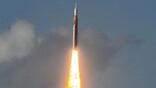
Launched from Kennedy Space Center on April 1, the Artemis II crew is to transit around the far side of the Moon on April 6 on a flightpath bringing them within 4,000 to 5,000 mi. of the lunar surface for some scientific observations. They will travel farther from Earth than the current record of 248,655 mi. set by the Apollo 13 crew.
After looping behind the Moon, the Artemis II crew will depart the lunar realm on April 7 and, thanks to the TLI, begin their trek back to Earth. They will rely on only three planned return correction maneuvers provided by the ESA service module’s orbital maneuvering system engine.

Related Content