This article is published in Aerospace Daily & Defense Report part of Aviation Week Intelligence Network (AWIN), and is complimentary through Jun 04, 2026. For information on becoming an AWIN Member to access more content like this, click here.

NASA’s single largest contract—for the operations and management of the Jet Propulsion Laboratory (JPL) in Pasadena, California—will be up for bids for the first time in the agency’s history.
It is a move NASA hopes may cut costs while maintaining the center’s expertise in planetary and space science mission operations, deep-space communications and the development of advanced technologies for space exploration.
Since its inception in 1936, JPL has been synonymous with the California Institute of Technology (Caltech). Originally supported by the U.S. Army, JPL was transferred to NASA after the space agency was created in 1958.
JPL is the only federally funded research and development center (FFRDC) in NASA’s portfolio and is among the 42 current FFRDCs owned by the U.S. government, a list maintained by the National Science Foundation’s National Center for Science and Engineering Statistics shows.
Caltech’s sole-source contract to operate JPL is worth about $2.4 billion per year.
Last year, NASA issued a solicitation seeking information and input from research organizations, companies and other entities with the technical chops and management skills to potentially operate the lab. Among the registrants for a NASA July 2025 presoliciation procurement briefing were MITRE, which operates six FFRDCs for various other U.S. agencies, the Universities Space Research Association, Southwest Research Institute, Lockheed Martin, Boeing, and several universities including Caltech.
NASA on May 22 announced it would proceed with a competition for JPL management, effective when Caltech’s current 10-year, $30 billion contract ends on Sept. 30, 2028.
“Conducting a competition for this contract enables NASA to assess the potential benefits of alternative management approaches to the FFRDC, including opportunities to enhance mission performance, innovation, and overall cost and operational efficiency, consistent with federal competition requirements,” NASA wrote in a press release about the upcoming solicitation.
“This decision is part of a broader government-wide and agency effort to find efficiencies, strengthen performance, and drive mission outcomes faster and more affordably,” it added.
“This announcement comes as no surprise,” Caltech President Thomas Rosenbaum and Caltech Vice President and JPL Director Dave Gallagher wrote in a joint memo released May 22. “We have been in discussions with the agency about their intent to compete the contract and welcome a fair and open competition.
“Caltech is well prepared with a team established last summer to ensure we are positioned for success, and we will respond to the request for proposals (RFP) once released,” they added. “We have and will continue to evolve and take the necessary steps to ensure the laboratory remains the nation’s premier center for the robotic exploration of the universe.”
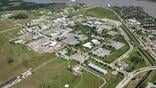
JPL spans 167 acres in Pasadena and includes 139 buildings, encompassing about 6.8 million ft.² of office space and 906,000 ft.² of non-office space. The facilities are “integral to advancing NASA’s science and exploration objectives, enabling the development and execution of complex space missions, and providing oversight of NASA’s Deep Space Network space communication operations and system modernization,” NASA noted in its 2025 Sources Sought procurement notification.

Related Content