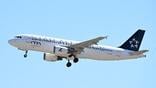
Listen in as Scandinavian Airlines (SAS) Head of International Network Gonzalo Pernas shares his thoughts on all aspects of SAS’ strategy, including upcoming fleet decisions.
Subscribe Now
Don't miss a single episode of the award-winning Check 6. Follow us in Apple Podcasts, Spotify or wherever you listen to podcasts.
Discover all of our podcasts at aviationweek.com/podcasts
AI-Generated Transcript
Victoria Moores (00:10): Hello, everyone, and thank you for joining us for Window Seat, our Aviation Week air transport podcast. I'm Air Transport World Europe and Africa Bureau Chief Victoria Moores, and I'm delighted to welcome you on board. I'm joined this week by SAS Head of Network Planning International Gonzalo Pernas. Welcome, Gonzalo.
Gonzalo Pernas (00:27): Hello, Victoria.
Victoria Moores (00:28): Thank you. And I am also joined by Routes Editor-in-Chief David Casey.
David Casey (00:33): Hi, Victoria.
Victoria Moores (00:35): So today we're going to be having a conversation about SAS, Scandinavian Airlines, and I believe going to cover topics like network planning, alliance dynamics, and where SAS fits into European aviation now. And let's face it, over the last few months and year, you've been very, very busy. SAS has left Star Alliance, joined SkyTeam, and there's now potential for Air France-KLM to increase its equity stake from 19.6% to 60.5%, giving it majority control. And I think that's probably the headline right now around SAS. So I'm wondering, Gonzalo, whereabouts are you up to with that process with Air France-KLM?
Gonzalo Pernas (01:18): Yeah. So as you very well explained, Victoria, some years ago in 22, we got a new consortium of investors that took the ownership of SAS among them was Air France-KLM as a minority investor. And last year they announced that they would like to take a majority position in the company and that is in the process that needs to be cleared by competition authorities. So as far as we know, Air France-KLM is proceeding with that process. And what we hear is that we can expect this process to be finalized in the second half of 2026. Assume all these process take some time with regulatory approvals and so on. And this is taking a bit longer than initially expected. So the latest prospects is that it will happen by end of 2026 or even beginning of 2027.
Victoria Moores (02:14): And I'm wondering how that's impacting where you're at now because it's an interesting position to be in. They do not have majority control at this point. I imagine that limits what you're able to do together. So I'm wondering where you're at within that limbo as it were.
Gonzalo Pernas (02:30): Exactly. So for the moment, SAS is an independent operator. As you mentioned, we changed the alliance and that had of course an impact on some decisions. But when it comes with Air France-KLM, they are only alliance partners. So our relationship limits to what you do in the alliance sphere. We've signed codeshare agreements, we have frequent flyer program agreements and so on, but there is no kind of farther commercial or even network cooperation because we're not legally allowed to. So that's how it is for now.
David Casey (03:05): And in terms of the situation at the minute, as we all know, I'm sure our listeners know and people in the industry know it's a challenging time. There's a lot of volatility in the market the minute with high fuel prices. How is SAS feeling as we're approaching that peak summer period? What is the outlook for the next few months? Are you still seeing strong demand across the network or are you having to pull back in certain markets?
Gonzalo Pernas (03:29): Yeah, that is indeed a big challenge. I think we can all see how the industry, the European aviation industry was doing quite well until now. And that of course was a big shock. For the moment we see similarly, as I heard from other players in the market, we see it's a cost shock, quite a big one because of course fuel represents around one-fourth, one-third of the cost and then the price has been going up 200 to 150%. So you can quickly make numbers how that makes an impact on a low-margin industry. In a way, positive situation is that we don't see for the moment any relevant impact in demand with some isolation of specific geographies where geopolitical situation has been worsened, but with the rest of the market, we see for the moment quite a good demand level. But I am of course afraid, and we are of course afraid that at some point if this situation continues, we might get another inflation wave, a bit of a flashback from what happened after the start of the Ukraine conflict and that will probably have even bigger impact.
Victoria Moores (04:47): You mentioned about the cost impact there. I imagine that you've probably got hedges in place which are protecting you from some of the fuel price volatility at the moment. I'm wondering what you're hearing from your fuel suppliers. Do they foresee any issues at all in actually being able to source the fuel so that you're able to keep up flying program?
Gonzalo Pernas (05:09): So actually we're not a public company, so we don't disclose details, but we've been open to the fact that we don't have the hedge levels that other competitors have. So in that regard, this crisis is hitting us even harder and we're taking into account what countermeasures we can do to try to soften the impact. When it comes to the sourcing and availability of fuel, I'm not an expert myself but of course the company is following very carefully the situation. And what I hear in all respects is that the situation is being monitored, but so far there is no red flag when it comes to availability of fuel.
David Casey (05:52): As a network planner, how difficult are environments like this? Obviously you're used to dealing with challenges. The aviation industry is clearly no stranger to crises. We emerged from the pandemic and then we've got geopolitical situation in Ukraine and the Middle East. How challenging is that to plan a network? Are you still able to make those long-term decisions or is it more short-term tactical changes that you have to make?
Gonzalo Pernas (06:20): It's of course a challenge, but at the same time, I usually say that in aviation we are best at crisis management. So unfortunately we can show again how we can do that well. At this moment we have finalized the planning of the next winter season, that is already done luckily, but we have already started the planning for the next summer season while we need to revisit the capacity for the current summer 2026 season. So we need to be looking at and having in mind several timeframes at the same time. That's of course a challenge, but the team is doing really well at managing these challenges and trying to adjust the situation.
David Casey (07:00): And in terms of some of the network decisions that you're making, you've opened some interesting new routes. We've seen Seoul, we saw Atlanta and Seattle as well. Just talk us through how you're making those decisions, what markets you're targeting and looking at at the minute.
Gonzalo Pernas (07:16): So as part of this repositioning that SAS has made since the emergence from Chapter 11, we have had a clear direction towards becoming a premium network carrier that can cover the north part of Europe. And this has crystallized in the strategy of creating a global hub in Copenhagen. We've always had three hubs in Copenhagen, Stockholm and Oslo. We still have the three hubs in place, but the reality is that we are creating in Copenhagen something that didn't exist in the past. We were, so to say, more a regional player and now we have a higher ambition and we want to cover a larger geography in Europe. We want to enable everyone that lives north and east of Amsterdam and Frankfurt on a map. We want them to have through Copenhagen the best access to North America and Asia. And that's what we're doing and in that regard why we opened Atlanta, Seattle, Seoul and next in line is Mumbai that is opening June 2 now.
Victoria Moores (08:26): You mentioned there about Copenhagen being a global hub. Obviously you're adding those long-haul routes. Where are you at in terms of fleet planning to support those routes? Are you evaluating any further aircraft at the moment?
Gonzalo Pernas (08:40): Yes, definitely. In the short-haul sphere, we already had a well-consolidated fleet with A320neos. We're very happy with that being the backbone of our short-haul fleet. We introduced a new platform called SAS Link based on Embraers. For the moment they are E1, the old technology of Embraers. And we announced last year an order for 45 to 55 Embraer E2s, which we believe are very important in increasing and providing the connectivity to Copenhagen Hub as well as to help us remain being relevant in Stockholm and Oslo with frequent departures to domestic and other European destinations. So the short-haul side of things is kind of quite clear and solved. When it comes to long-haul, we see there is a big potential for us. Once we have this ambition of creating a global hub in Copenhagen, global by definition goes beyond Europe. And that's where when we look at our current long-haul fleet, we are on the lower side when we compare with our peers in the market and we believe there is quite some potential to increase the numbers.
(09:55): So we are looking at options to increase our long-haul fleet.
Victoria Moores (09:59): Long-haul fleet do you have at the moment? What specific type capacities are you looking to add?
Gonzalo Pernas (10:06): At the moment we have around 15 wide-body aircraft, and I say around because we are having two new A350s joining the fleet this year and we have three A321 LRs, the narrow bodies that reach long-haul destinations. We are very happy with this mix and we would like to continue in that direction. So we are having conversations with both Boeing and Airbus to explore more wide-body capacity and at the same time considering the options to expand the A321 LRs or XLRs.
Victoria Moores (10:40): Are you willing to name the capacity size that you're looking at?
Gonzalo Pernas (10:45): A bit too early days. And I think given the private situation we have at the moment, we wouldn't disclose, but I think we are talking about a considerable expansion of the long-haul fleet.
Victoria Moores (10:57): And roughly when might that come to a decision? It sounds though it's still early days.
Gonzalo Pernas (11:03): Well, things are moving as we speak because the current situation in the oil prices and geopolitics, of course, make an impact on these long-term decisions, but we hope we can reach to some announcement in the coming months.
Victoria Moores (11:18): Okay. Final question from me before handing back to David and that's what kind of number of units would you be looking at there? Are we talking five aircraft, 50 aircraft? Any numbers in mind?
Gonzalo Pernas (11:33): I could say somewhere in between five and 50, but definitely, yes, repeating myself, we have 18 right now. We see potential for a considerable extension. So yeah, it's not five alone.
David Casey (11:48): Thank you. And in terms of what that fleet will allow you to do, which markets do you see you targeting with some of those aircraft once they enter the fleet?
Gonzalo Pernas (11:58): Yeah, so we've thought a lot about the wording. When we mentioned Global Hub, it sounds like a big ambition and then we were confirmed, yeah, we actually want to be a global hub. This means that the traditional long-haul strategy that SAS had to cover the Northern Hemisphere, we at some point want to go beyond that. So we still see points in North America and then definitely in Asia that we can cover, but then we want to go beyond that. We are aware of the geographical position we have. We might not be the best suited to connect to points in Africa or South America, but still we believe we can have some key guidewires in those regions, for example.
David Casey (12:42): And in terms of the Asia traffic though, I know you previously served China, you had a route to Shanghai. Do you see that market coming back? I mean, how tough is that the minute with the overflight situation?
Gonzalo Pernas (12:53): I think it's quite clear that market is disrupted first by the fact of the Russian airspace being closed, but this closure only affects to one side of the market and not to the other. So in that regard, SAS is very similar to other European carriers where we at some point realized we couldn't compete in this unfair market situation. And for that reason, we don't have any operation with China at the moment, which is a pity because we are constantly in touch with the airports in that region. And we hope the geopolitical and airspace restrictions change, but until then I have difficult to see that we might be doing any changes.
Victoria Moores (13:37): Thinking about the network and the impact of the SkyTeam Alliance join, what's been the biggest shift with that? And what's the impact on your network development as a result of it? Are there any geographic areas where you're now stronger or weaker as a result of the change?
Gonzalo Pernas (13:57): Yeah, so maybe contrary to what many outside think, most of the changes we've made in network has been a result of the company repositioning strategic-wise and not that much a result of the alliance change. Of course, the alliance change had an impact with changing partners basically in mostly Europe and North America that are the main markets for us. But while many people predicted that we would stop serving what are strong United Hubs, for example, such as Washington, Chicago, New York, we have the same capacity as in the past. And similarly, you could say about some strong Star hubs like Munich or Frankfurt, we've been growing on those markets recently because we see those are important markets when it comes to feed our Copenhagen hub. While for example, in Amsterdam, we haven't been growing because there wasn't any possibility either with the constraints at the airport.
(14:56): We have increased a bit in Charles de Gaulle because that was a market maybe where we were a bit undersized. But again, I wouldn't say the Alliance has made a huge change in how we look at the network, more how the new SAS looks like.
Victoria Moores (15:11): Previously, you were one of the founding members of Star Alliance. I've heard from your chief executive over the last few months that one of the motivators for that shift over from Star to SkyTeam was the fact that you weren't able to get into the A++ joint venture over the North Atlantic and that the willingness or potential willingness to get involved in Air France-KLM's joint venture instead is very much there. And I'm wondering what kind of impact will that have for you in terms of international network planning and what kind of timeline might there be for that or is it just too early to say?
Gonzalo Pernas (15:53): Yeah, so it's no secret that the JVs, and there are three in the North Atlantic market, the JVs have been the biggest commercial innovation, so to say, in the last decade. And when you look at the public companies, you can clearly see that the ones that are involved in JVs are the ones that are more successful. So of course from our side, from SAS, we see a potential in joining a joint venture. We tried in the past when we were in Star and now definitely when we are in SkyTeam and hopefully approaching Air France-KLM, we see that as a very interesting possibility. When it comes to the timings, that's not in our control at the moment. And as far as I know, that is a natural second step after the Air France-KLM merger is approved, then we can look at request to join the Blue Skies JV with Delta and Virgin and France-KLM, of course.
(16:56): And then that will need to be also scrutinized by competition authorities and be approved. So timeline is a bit uncertain, but it might take some time still.
David Casey (17:07): And in terms of the partnerships that you have now with SkyTeam Carriers, I think last year you launched some with Aero Mexico and we saw some other codeshares, Vietnam Airlines, WestJet as well. How important are those Alliance partners? Are you seeking new codeshares? And if so, what markets are you thinking could be of benefit to SAS?
Gonzalo Pernas (17:29): Yeah, that's something that has been quite interesting in turn to work with because the Alliance shift pushed us to review and rethink what was our partnership strategy. And actually what we decided is that if we want to be a bigger global player, we need to capitalize even more on partnerships. So we've been very active in reviewing many of the agreements we had because of course the agreements within the Alliance are the core of your partnerships, but every airline has agreements outside the alliance as well. So reviewing all that, then it was a natural step that the new partners in the alliance, we would approach them and sign codeshare agreements. So as you mentioned, we had a bunch of them. I believe there are some that are in the making and we'll do some announcements in that regard in the coming months of this year. And then we are still exploring what the next possibilities should be.
Victoria Moores (18:32): And final question, taking a look forward over the next few months, what are the major projects that you're going to be tackling, the major things that you're working towards?
Gonzalo Pernas (18:43): So definitely the long-haul fleet renewal and expansion, that's a key enabler for us to be able to implement our strategy and really be able to grow the Copenhagen Global Hub. And then unfortunately we need to focus a lot on the short-term management of the current fuel crisis. Otherwise, we are all hands-on in trying to build a strong Summer 2027 schedule where our view is that it will be the third summer for the new company and Global Hub. So we want to take the next step on that expansion, but we want as well to reinforce our position in Stockholm and Oslo when it comes to European traffic because we are definitely a strong player there and we believe there are opportunities in those markets as well.
Victoria Moores (19:36): So it sounds as though the team is extremely busy having to manage almost three seasons at once and then on top of that, looking at the long-haul renewal. That's about all we've got time for today. So Gonzalo and David, I'd like to thank you very much for joining us and thanks also to our producers, Guy Ferneyhough and Cory Hitt. And of course, a huge thank you to you, our listeners for following Window Seat. Make sure you don't miss us each week by subscribing to the Window Seat Podcast on Apple Podcasts or wherever you listen. This is Victoria Moores disembarking from Window Seat.


Related Content