This article is published in Aviation Week & Space Technology and is free to read until May 24, 2026. If you want to read more articles from this publication, please click the link to subscribe.
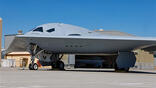
U.S. Navy Commits To F/A-XX Selection Amid Aviation Budget Increase

Northrop Grumman says it has the capacity to deliver its F/A-XX proposal despite Pentagon concerns about the overall industrial base.
The U.S. Navy has outlined its new schedule for awarding the long-awaited F/A-XX contract but has not detailed plans to pay for the program despite a surge in aviation funding.
For more than a year, the military aviation world and its defense industrial base have awaited the selection of either Boeing or Northrop Grumman for the sixth-generation carrier-based fighter. Uncertainty has persisted amid repeated delays, as leadership at the Pentagon and Office of Management and Budget seesaws about the program. However, in rolling out the Navy’s new fiscal 2027 budget request, top officials were confident about moving forward.
- F/A-XX downselect is expected in August
- Industrial capacity concerns remain
“We are committed to the sixth-generation fighter,” said Rear Adm. Ben Reynolds, the service’s deputy assistant secretary for budget. “This fighter’s operational need is unquestionable. This is a strategic imperative to ensure the joint force maintains uncontested air superiority for decades to come.”
Chief of Naval Operations Adm. Daryl Caudle said on April 20 that an F/A-XX selection is now expected in August. In comments to reporters at the Navy League’s Sea-Air-Space conference, Caudle raised a continued concern about the industrial base’s capacity to build the fighter. The service has a “check twice, cut once kind of mentality” on the decision if one of the contractors is not able to deliver on the needed timeline, he said.
Top officials have repeatedly questioned the industrial base’s capacity, including prior Navy Secretary John Phelan, who first raised the issue to lawmakers in the spring of 2025. However, Phelan abruptly stepped down on April 22, effective immediately, leaving new uncertainty at the top of the service.
Industry leaders quickly came to their own defense. Northrop Grumman CEO Kathy Warden said in an April 22 earnings call that the company is “confident in [its] ability to deliver.” She added that Northrop and its suppliers “are prepared to bring on the workforce and infrastructure needed.”
While officials have publicly committed to advancing the F/A-XX, the Pentagon’s record fiscal 2027 budget request provides limited funding for it. The request includes $140 million total for the program; more than half of that is nested in the Pentagon’s proposal for a reconciliation measure in Congress as opposed to its base request.
The Navy’s request would be a large increase for the rest of its aviation fleet, calling for $34.4 billion in procurement—more than double 2026’s total of $16.6 billion. This procurement includes 47 Lockheed Martin F-35s—20 F-35Cs for the Navy as well as 17 F-35Cs and 10 F-35Bs for the Marine Corps.
In a major move, the request proposes restarting Boeing P-8A Poseidon procurement with $4.2 billion to buy 12 more of the submarine-hunting aircraft. This would be the first procurement of the type since the fiscal 2024 budget, adding to the 138 already acquired.
Budget justification documents indicate that the cost of each P-8A has risen substantially—up to a $328.5 million flyaway cost from $172.1 million in previous years. This increase likely stems from Boeing’s shift away from producing the 737NG—the basis of the P-8A—to the 737 MAX. The program has also faced global inflationary pressures as well as costs for new anti-submarine-warfare upgrades to the jet.
In addition, the Navy is extending production of the Northrop Grumman E-2D Advanced Hawkeye, since the fleet has experienced increased joint usage. The request calls for 12 more—six in 2027, two in 2028 and four in 2029—on top of the 85 already funded. This amount is required “to replenish accelerated service life burn down of existing force structure due to Overland Airborne Early Warning tasking,” the documents state.
E-2Ds have been the most requested aircraft in the Pentagon’s fleet for airborne early warning missions, given readiness issues in the Air Force’s aging Boeing E-3s and uncertainty in the follow-on Boeing E-7 program.
In the budget plan, the Navy aims to increase spending on the Boeing MQ-25 Stingray autonomous refueler. At the time of the request, the first flight of the aircraft was imminent, Boeing CEO Kelly Ortberg said in an April 22 earnings call. The request includes $852 million to procure three MQ-25s, five in 2028 and seven per year for the following three years.
Budget justification documents note another cost increase in the MQ-25. The individual flyaway unit cost is up to $181.6 million from $166.1 million in fiscal 2026. The request covers the three low-rate initial production aircraft, an award for which is expected in March 2027.
The request would also increase procurement of Lockheed Martin KC-130Js for both the Navy and Marine Corps—nine each, plus 10 new UC-12W VIP transports for the Marine Corps. For rotary-wing programs, the budget would increase production of the heavy-lift Sikorsky CH-53K for the Marine Corps to 22 in 2027.


Related Content