This article is published in Aviation Week & Space Technology and is free to read until Jul 12, 2026. If you want to read more articles from this publication, please click the link to subscribe.

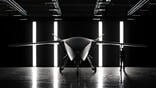
A German consortium urged its government to launch a new fighter soon.
More than 40 years after France withdrew from the Future European Fighter Aircraft program, Paris and Berlin have called it quits on their effort to work on a sixth-generation combat aircraft in a partnership also involving Spain.
Although the outcome has been months in the making, it has created a sense of urgency among governments and industry to define what comes next. Stakeholders fear losing more time than the roughly three years already wasted as governments worked to pull the program together and then to salvage it.
- Airbus CFO: “It is good the deadlock is over”
- Germany assembles industrial team for what comes next
The failure of the New-Generation Fighter, the central pillar of the Franco-German-Spanish Future Combat Air System (FCAS), is largely due to industrial tensions, German Defense Minister Boris Pistorius said on the eve of the ILA Berlin Air Show—eight years after Airbus and Dassault Aviation agreed to work together on the project at a previous show outside the German capital.
Dassault, which was the industrial lead on the fighter program, a year ago voiced displeasure with the program’s structure. The company said it lacked sufficient control and wanted change. That set off months of industrial bickering. The issue came to a head with a new phase of the development program that was due to start in October.
“An agreement was not attainable,” Pistorius told reporters June 9.
Geopolitics also collided with the FCAS. When the governments shook hands, their ambition to develop a fighter was more an industrial and jobs undertaking than a military necessity. Russia’s full-scale invasion of Ukraine in 2022 drove a change in mindset, making defense more central to French and German motivations. That also crystallized requirements differences. France needs a fighter that is carrier-capable and can deliver nuclear weapons. Germany does not.

Airbus CEO Guillaume Faury in May said that many assumptions underpinning the FCAS before the escalation in Ukraine were no longer valid, and that was one of the two major challenges facing the project. When the program was launched, the parties compromised “to get to a product at minimum cost,” Faury said. With a war on Europe’s doorstep and the prospect of wider conflict, “the specifications become more important,” he added.
For months, politicians on both sides, including French President Emmanuel Macron and German Chancellor Friedrich Merz, tried to find a compromise.
“President Macron and I reached the shared conclusion that the companies would not be able to come together on the construction of a common combat aircraft,” Merz said June 10, five days after formally deciding to pull the plug.
Still, the end to months of back-and-forth “opens new opportunities for industry to continue advancing modern combat aircraft development through other avenues,” he said.
“It is good the deadlock is over,” Airbus Chief Financial Officer Thomas Toepfer said in an interview at ILA. “Given the situation, this was the right and only possible solution.”

Just how extensive the rupture will be is still unclear. MTU Aero Engines and Safran had formed a joint venture—the European Military Engine Team—to work on the fighter’s turbojets. Both have indicated they are open to keeping the partnership alive even as the aircraft-makers part ways.
“The basic situation remains unchanged, and the need for a sixth-generation fighter jet remains as great as ever,” MTU Chief Program Officer Ottmar Pfänder told journalists on the opening day of the event.
Companies are urging the governments to preserve national expertise and industrial capability. “We need a future framework to secure what has been achieved so far,” Pfänder said.
The clock is ticking. Money for the current development program runs out in September. Industry officials are looking for bridge funding to keep teams working on the program while governments hammer out what to do. MTU has about 350 people on the program; Airbus has about double that. Smaller vendors could be even more pressed to pay the bill to keep engineering teams intact.
An ideal outcome would be for governments and industry to coalesce around a new plan by year-end, one industry official says. “Speed is of the essence,” a European defense executive states.
Berlin will likely pursue a partnership for a new effort at developing a future fighter, German Air Force Chief of Staff Lt. Gen. Holger Neumann said at ILA, noting that the timeline for such a program will be driven in part by political decisions about the path forward.
The new fighter would have to work with uncrewed platforms and connect with other systems, Neumann said. He added that he has told the German Federal Defense Ministry to buy only fifth-generation or more advanced platforms beyond 2035. That also drives the thinking that the new aircraft needs to materialize around 2040, when Germany’s Eurofighter Typhoon Tranche 2 aircraft will reach the end of their service lives.
Fighter requirements are likely to be reset. Germany and Spain are no longer driven to shoehorn their needs into those of France, which were constrained by carrier compatibility. Throughout the program, Dassault and Airbus concept drawings for the fighter differed, suggesting the gap in requirements definition.
Germany, for instance, wants an air superiority fighter with greater range and large internal missile carriage to accommodate bigger, longer-range weapons. That is driving the need for a large airframe and greater thrust. Another German requirement: greater stealth than the Lockheed Martin F-35.
Pistorius said it is premature to say how Germany will proceed, but he noted that the government has been talking to different actors for months.
Berlin and Madrid are likely to continue working together while looking for another anchor partner and possibly smaller participants. But government and industry officials want to avoid the trap of bringing in so many partners that harmonizing requirements and executing the program become impossible.
“With what we know today, we would not structure the program the way we did,” Pistorius said. “That’s a lesson we need to learn.” The fighter program was a big, ambitious undertaking that has now collided with reality, he added. “We have to live with that.”
One potential program partner is Sweden, although its fighter requirements have been more modest. Poland, the Netherlands and Belgium—the third formerly an observer to the FCAS—have skills that could bolster them as smaller participants.
Quietly, industry officials are keeping an eye on the rival Global Combat Air Program, where there have been simmering tensions. Japan and Italy have complained about elements of the program, and the UK has been caught up in internal budget squabbles that led to the resignation of the UK defense secretary on June 11. A rupture could open new partnership opportunities.
On the French side, the pathway is clearer, given its history with Dassault’s Rafale. The airframer is to build the aircraft, Thales is to provide key electronics subsystems, and Safran is slated to deliver the powerplant. France is somewhat locked in after green-lighting a new aircraft carrier program.
Michael Schoellhorn, CEO of Airbus Defense and Space and president of German aerospace trade association BDLI, said German industry has the expertise, technology, industrial capacity and determination required to develop and build the FCAS and the sixth-generation fighter. He stressed that industry is not advocating a go-it-alone approach for the country and only wants to ensure it has a “substantial and responsible role.”
German suppliers Airbus, Autofly, Diehl, Hensoldt, Liebherr, MBDA, MTU Aero Engines and Rohde & Schwarz have teamed in what they call Team 6 Gen. The group says it is ready to pursue a program and urge the government to act.
“We can’t lose time,” Team 6 Gen said as it unveiled its position paper, signed during ILA. Contractual progress is required to meet Germany’s ambitious timeline of fielding a next-generation stealth fighter before 2040, the group argued.
Germany has to take a leadership position while being open to multinational cooperation among like-minded countries, Team 6 Gen said.
While fighter cooperation is dead, other elements of the FCAS program are progressing, such as pursuit of uncrewed aircraft programs and development of a “combat cloud,” a network that can tie future platforms together.
German defense electronics specialist Rohde & Schwarz used ILA to unveil its concept for a multidomain directional communications system that, in the air domain, would be the backbone of a combat cloud. The company spelled out plans to start flight-testing elements as early as next year, with the goal of having key elements customer-ready by the end of the decade.
“You can really apply all the [electronic warfare] ideas of low probability of intercept, low probability of detection,” Andreas Domann, vice president of multidomain communications at Rohde & Schwarz, said in an interview. “You can really tune who is going to see you, who is going to hear you. You can hide away.”
Air domain applications include allowing stealthy fighters to communicate with each other without the risk of detection as well as networking crewed platforms and uncrewed swarms to share information.
For Europe, all this bickering is eerily familiar. Tension, deadlock and disagreement have been at the heart of almost every cooperative program in the region. The UK and France successfully developed the Sepecat Jaguar in the late 1960s, but no other country has built a combat aircraft in partnership with French industry.
When an Anglo-French project to develop a variable-geometry combat aircraft failed in the 1960s after Paris pulled out, London pursued a program with Germany and Italy that ultimately produced the Panavia Tornado. The French withdrawal from the pan-European Future European Fighter Aircraft came two decades later, birthing the Rafale on one side and the Eurofighter Typhoon on the other. In the 2010s, Paris and London explored development of an uncrewed combat air vehicle. The two split when the UK voted to leave the EU, spurring France and Germany to explore the FCAS instead.
Merz said that despite the fighter rift, Paris and Berlin will remain defense partners and are poised to agree on new cooperation efforts next month. “Our defense ministers will present a comprehensive and modern road map for defense-industrial cooperation,” he said. “We want a small number of genuinely relevant and executable projects that can make a real difference to our collective security.”


Related Content