This article is published in Aerospace Daily & Defense Report part of Aviation Week Intelligence Network (AWIN), and is complimentary through Nov 11, 2026. For information on becoming an AWIN Member to access more content like this, click here.

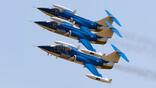
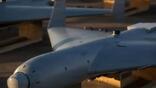
Florida-based Lockheed F-104 operator Starfighters Space has released the first images of its newly developed modular test platform, or “wind tunnel in the sky,” for evaluating high-speed configurations, systems and other payloads.
Recently delivered to Starfighters by Italian engineering company Robby Moto Engineering (RME), the 12-ft. missile-like unit is designed to support reusable Mach 2-plus testing in real atmospheric conditions.
Compatible with the existing F-104 underwing pylon systems, the platform’s architecture incorporates sets of interchangeable nose sections, tail assemblies, fin configurations and internal payload compartments. Development of the unit is part of Starfighters’ plan to broaden the F-104's utility for high-speed test roles.
Driven by interest from the Pentagon and researchers, Starfighters says the design will offer several minutes at a Mach 2 speed condition versus seconds or single-digit minutes in a conventional wind tunnel.
In particular, the company hopes the aircraft and its new test platform will be capable of evaluating materials, designs and technology for hypersonic systems, as well as sensors, avionics, communications equipment and electronic warfare systems. It will also support extended-duration microgravity conditions for scientific payloads, Starfighters says.
Coincident with the test platform's development, RME has also provided Starfighters with the initial hardware for the first version of the company’s in-development, air-launched Starlaunch rocket family. The Starlaunch 1 is designed to be fired off the wing of the F-104 and boost test payloads to suborbital altitudes of more than 100 km (62 mi.).
The first Starlaunch 1 is expected to undergo initial captive-carry flight tests in December, Starfighters says, and could fly at the same time as the test platform. “The December flight would be conducted between Starfighters’ base at NASA’s Kennedy Space Center and the FAA-licensed Cecil Spaceport in Jacksonville,” the company says.
The flight is expected “to provide a demonstration of the rocket’s flight characteristics while also allowing the company to test aircraft integration and establish procedures for future Starlaunch missions,” it adds.
Starfighters says the flight “may provide an opportunity” to fly the airborne test platform hardware “under the other wing on a customer-funded rideshare mission, while also serving as a counterweight to improve aerodynamic stability.”
“The planned captive-carry flight would move Starlaunch 1 from design and ground-based development into flight testing,” Starfighters CEO Tim Franta says. “This work on Starlaunch 1 is also expected to generate engineering and operational experience to inform the future development of Starlaunch 2,” he adds referring to a planned, more capable follow-on version.

Related Content