
This article is published in Aerospace Daily & Defense Report part of Aviation Week Intelligence Network (AWIN), and is complimentary through Nov 11, 2026. For information on becoming an AWIN Member to access more content like this, click here.

MUNICH–Shield AI has shown off the first prototype of its X-Bat tail-sitting, vertical-takeoff-and-landing (VTOL) autonomous combat aircraft and plans a first flight before year’s end.
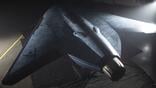
The company showed video of X-Bat serial number 001, bearing civil registration N228XB, at the International Fighter Conference here Nov. 3, ahead of test flights planned for Shield AI’s test base near Wichita.
Two additional prototypes are expected to follow shortly, Ryan Tseng, Shield AI’s president and co-founder, told the conference.
The company aims to accelerate flight testing ahead of low-rate production in 2028 and an initial operational capability in 2029.
Tseng said events in the Middle East over the past year had reinforced what he described as the global need for an aircraft such as X-Bat, which the company claims is more survivable and provides more capacity and readiness at a lower cost than contemporary combat aircraft. He cited Iranian one-way attack drone strikes that destroyed U.S. aircraft on the ground, highlighting the vulnerability of airbases as well as the shootdown of U.S. combat aircraft over Iranian territory, which he described as a “reminder of the extreme danger and difficulty associated with [personnel] recovery.”
Tseng said the prototype had been completed ahead of the company’s original schedule, allowing Shield AI to begin validating the design sooner than planned.
The coming flight tests will determine whether Shield AI can translate X-Bat’s unusual launch-and-recovery concept into a practical combat aircraft capability.
“We’ve got a plan ... we’re going to fly it, we’re excited to do it, and it’s going to meet the objectives,” Tseng told Aviation Week.
The video revealed two features not previously visible on the subscale X-Bat mockup displayed at trade shows.
A pair of blister-shaped fairings can be seen on either side of the upper fuselage centerline, along with two apertures on the fuselage spine that may be attachment points for the launch-and-recovery vehicle. Neither Tseng nor a Shield AI spokesperson would comment on the features.
Designed to take off and land vertically from a trailer-mounted system, X-Bat will operate independently of runways and could be dispersed or concealed more easily than conventional combat aircraft. Shield AI says it could operate from almost 50-ft.-by-50-ft. paved surfaces or ship decks.
The aircraft uses a General Electric F110 engine operating in afterburner to lift off vertically before transitioning to horizontal flight. For recovery, X-Bat is designed to perform a Cobra-like, high-angle-of-attack maneuver to return to a vertical attitude, with roll controls and wingtip jets then helping position the aircraft for landing.
The U.S. Navy is supporting development of the 22,000-lb. X-Bat through its Runway Independent Maritime Expeditionary Strike program, which has awarded Shield AI $200 million since July. Shield AI has also raised another $200 million privately to support the program through much of its planned flight-test campaign.
If fielded, X-Bat could extend fixed-wing combat aviation beyond aircraft carriers to other Navy vessels, potentially including destroyers and expeditionary sea bases.
Shield AI is also actively marketing the concept to international militaries, particularly in Europe and Asia.
Tseng said the prototypes would fly regularly to expand the aircraft’s flight envelope and address several technical risks.
One concern is the sustained operation of the F110 engine in a vertical attitude. Shield AI has worked with GE on modifications to the engine’s oil pump and sump system to accommodate the unusual operating conditions, he said. Another challenge is managing exhaust temperatures during shipboard operations. Some Navy vessels have required modifications to accommodate the heat generated by aircraft such as the Lockheed Martin F-35B and Bell-Boeing V-22.
Shield AI plans to use a jet blast deflector integrated into the launch-and-recovery vehicle to keep deck temperatures within acceptable limits.
Tseng said test-stand data supports the approach, while recoveries would be performed without an afterburner, reducing the thermal load.
Shield AI projects that X-Bat will carry up to 6,000 lb. of payload on internal and external stations and have a combat radius of 1,000 nm.
Beyond strike missions, Shield AI is exploring additional roles, including electronic warfare with an integrated jammer and potentially carrying an airborne moving-target-indication sensor.


Related Content
Comments
Regarding landing let's wait for flight testing.