This article is published in Aviation Week & Space Technology and is free to read until Dec 06, 2026. If you want to read more articles from this publication, please click the link to subscribe.

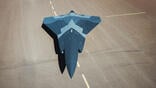
Airbus is using a pair of Kratos Valkyries to develop an initial CCA it hopes to sell to Germany. A CCA tender is still forthcoming.
Europe’s aerospace industry is investing heavily in collaborative combat aircraft, betting that the region’s air forces will soon need uncrewed systems to bolster combat mass and improve the survivability of their crewed fighters.
But while military leaders increasingly recognize the potential benefits, governments have been slower to commit the funding needed to turn these emerging technologies into operational capabilities.
- Manufacturers surge development efforts ahead of firm contracts
- European air forces pursue a variety of CCA strategies
- Missile shortages could undermine promised CCA combat mass
The past year has brought tangible progress. Leonardo has linked its M-346 jet trainer with Baykar’s Kizilelma uncrewed fighter, and Airbus has flown one of two Kratos Valkyries acquired to support its collaborative combat aircraft (CCA) development program. BAE Systems is nearing completion of its Brontanax demonstrator, and Airbus is advancing its own Ravenstorm design. Behind these efforts, manufacturers are investing in the autonomous systems and cockpit interfaces needed to make crewed-uncrewed teaming a reality.
More demonstrations are planned for 2027; whether government funding will follow is less certain. Germany appears to be reconsidering the pace of its CCA ambitions, Leonardo has struggled to secure Italian Air Force backing, and Poland has yet to allocate funding for its Harpii Szpon initiative.
For now, manufacturers are pressing ahead, largely at their own expense, in the hope that their investments in autonomy, aircraft development and crewed-uncrewed teaming will eventually translate into military contracts.
“Let’s say that when the customer tells us that they will need a capability, we will be ready,” Laurent Le Quément, head of future air power and uncrewed air systems at Airbus, told journalists at the International Fighter Conference in Munich on Nov. 3.
Airbus has been investing in anticipation of a German CCA requirement, driven partly by Defense Minister Boris Pistorius’ call for the Bundeswehr to achieve Kriegstuchtigkeit—or warfighting readiness—by 2029. Yet with that deadline approaching, Berlin has not committed to a major CCA acquisition program, and industry officials suggest Germany might be stepping back from those ambitions.

Airbus acquired two Kratos Valkyries as testbeds and flew the first in Sweden in September before making modifications to incorporate its autonomous mission systems and artificial intelligence technology.
The company plans to expand the complexity of flight trials progressively, demonstrating autonomous operations and control from an adapted business jet in 2027, weapons release in 2028 and teaming with a Eurofighter in 2029.
To enable Eurofighter teaming without modifying the fighter’s avionics, Airbus has developed a tablet-based interface pilots could use to issue high-level commands to CCAs through communications equipment integrated into a Rafael Litening 5 targeting pod. The proposed architecture uses Link 16 and an Airbus-developed low-probability-of-intercept waveform.
“With this solution, we have an initial or bridging capability,” said Marco Mehling, Airbus chief engineer for system of systems concepts and capabilities. “So if an air force is willing to start in 2029 developing its tactics, techniques and procedures, we will have a solution to offer.”
A more permanent CCA-control capability could eventually be integrated into the Eurofighter’s avionics through its Long-Term Evolution upgrade program.
Beyond the Valkyrie, Airbus is developing its own CCA, the U760 Ravenstorm, which it aims to bring to market in 2032. The six-metric-ton aircraft draws on the configuration of the Barracuda uncrewed demonstrator developed by Airbus predecessor EADS and first flown in 2006. Engineers are finalizing its overall configuration and defining its internal systems, Le Quément said. The company is also exploring more specialized, higher-end CCA designs for air-to-air combat and electronic warfare. Le Quément described these potential aircraft as more “exquisite” and “bespoke.”
Meanwhile, Airbus has shelved development of its earlier Wingman concept, unveiled at the 2024 ILA Berlin Air Show. Developed in cooperation with Helsing, the proposed aircraft was intended to use the Eurojet EJ200 engine, potentially providing supersonic performance.
Like Airbus’ Valkyrie, the Eurofighter will also be at the heart of the next round of trials with Baykar’s Kizilelma, Leonardo officials stated in October. Leonardo sees the Kizilelma as a potential initial CCA offering for European customers through its LBA Systems joint venture with Baykar but has so far struggled to attract interest from European nations. The Turkish aircraft has made considerable development progress, including weapon-release trials and integration of an active, electronically scanned array radar and electro-optical targeting system. The joint Leonardo-Baykar K-Swarm project is focused on designing and developing interoperability between crewed and uncrewed aircraft.
The UK, meanwhile, appears further along in turning its CCA ambitions into a funded acquisition effort. The Royal Air Force (RAF) has established a program office and appointed a senior responsible owner for its Storm Fighter initiative, and a formal competition is expected in the coming months.
The UK’s Defense Investment Plan has allocated £300 million ($400 million) to CCA development. BAE Systems is preparing to demonstrate its Brontanax aircraft alongside a Eurofighter during NATO exercises in 2027, and the RAF is targeting an operational CCA capability by 2030.
Air Chief Marshal Harv Smyth, head of the RAF, said at the Royal United Services Institute (RUSI) think tank in London on Oct. 26 that CCAs would provide the UK with a “force multiplier function” and the “affordable mass we so definitely require.”
The Netherlands is pursuing a different approach, becoming an observer in the U.S. Air Force’s CCA program. The Royal Netherlands Air and Space Force has acquired one General Atomics FQ-42 Vengeance and one Anduril FQ-44 Fury to evaluate the technologies and identify capabilities suited to its requirements. The service plans to use them to get the “best things out of what is available and the best capability for the smaller market that we have,” a Royal Netherlands Air and Space Force official said under the conference’s Chatham House rule.
But simply adding more uncrewed aircraft might not deliver the combat mass European air forces are seeking.
Justin Bronk, airpower and technology senior research fellow at RUSI, warned that CCAs could place additional demands on already stretched air forces, particularly as the number and type of personnel required to operate, maintain and arm them remain uncertain.
Bronk also questioned the value of adding more weapon-carrying platforms when European air forces already face limited missile stocks. Putting scarce weapons onboard aircraft that might be less survivable, are more dependent on communications links and harder to assure could increase the risk of losing them before they can be used, he argued.
“You could be actually reducing your effective combat power by adding more [missile] rails to a force that is missile-limited,” Bronk said.

Related Content