
This article is published in Aerospace Daily & Defense Report part of Aviation Week Intelligence Network (AWIN), and is complimentary through Nov 12, 2026. For information on becoming an AWIN Member to access more content like this, click here.

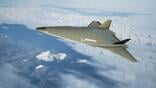
First rendering of X-70 Fractal.
KENNEDY SPACE CENTER, Florida—NASA Administrator Jared Isaacman announced a new subsonic X-plane program on Nov. 4, promising more will follow to recapture the agency’s legacy of breakthrough flight research.
The X-70 Fractal should reach first flight within two years as a subsonic testbed for advanced flight controls and maneuvering, with the ability to carry payloads up to 2,000 lb. A smoky, dark image revealed a blurred outline of an airframe with canted tails and possibly side-mounted engine inlets on either side of a wide fuselage.
The 10,000-lb. Fractal is designed to cruise at Mach .75, reach altitudes of up to 45,000 ft., and come with a range of 1,500 nm, NASA said. Further details were not disclosed, including the contractor.
“Know that X-70 is just one part of this new beginning for aeronautics. I promise you, there will be more,” Isaacman said, speaking to the UP.Summit here at Kennedy Space Center.
The announcement comes a month after Isaacman teased a similarly dark and smoky image of another as-yet-untitled X-plane program within NASA during an event in Los Angeles. The outline resembled the features of the retired Lockheed SR-71.
Former NASA employees have told Aviation Week they have been offered jobs to help return an SR-71 to flight. Satellite photos confirmed that the NASA-owned airframe with tail number 844 was removed from its display position outside the Armstrong Flight Research Center at Edwards Air Force Bass, California, in February. NASA has not confirmed plans to return the SR-71 to flight.
An announcement about another X-plane is expected at the UP.Summit on Nov. 6, the same day that President Donald Trump is scheduled to make an appearance at the event.
Isaacman, a pilot and avid high-performance aircraft restorer, champions the rebirth of a NASA X-plane portfolio designed to conquer extreme challenges in aeronautical research. In his remarks on Nov. 4, Isaacman invoked the legacies of the Bell X-1, North American X-15, Grumman X-29 and the Rockwell/MBB X-31. He did not mention NASA’s former SR-71 fleet.
“We need to get back to the radical airframe and engine designs, building and flying faster and higher than we have in decades,” Isaacman said.

Related Content



Comments